At a glance
- Role: Contract senior full-stack engineer; owned the admin shipment console.
- Stack: React, Remix, TypeScript, Prisma, PostgreSQL, Kafka, Vitest and Playwright.
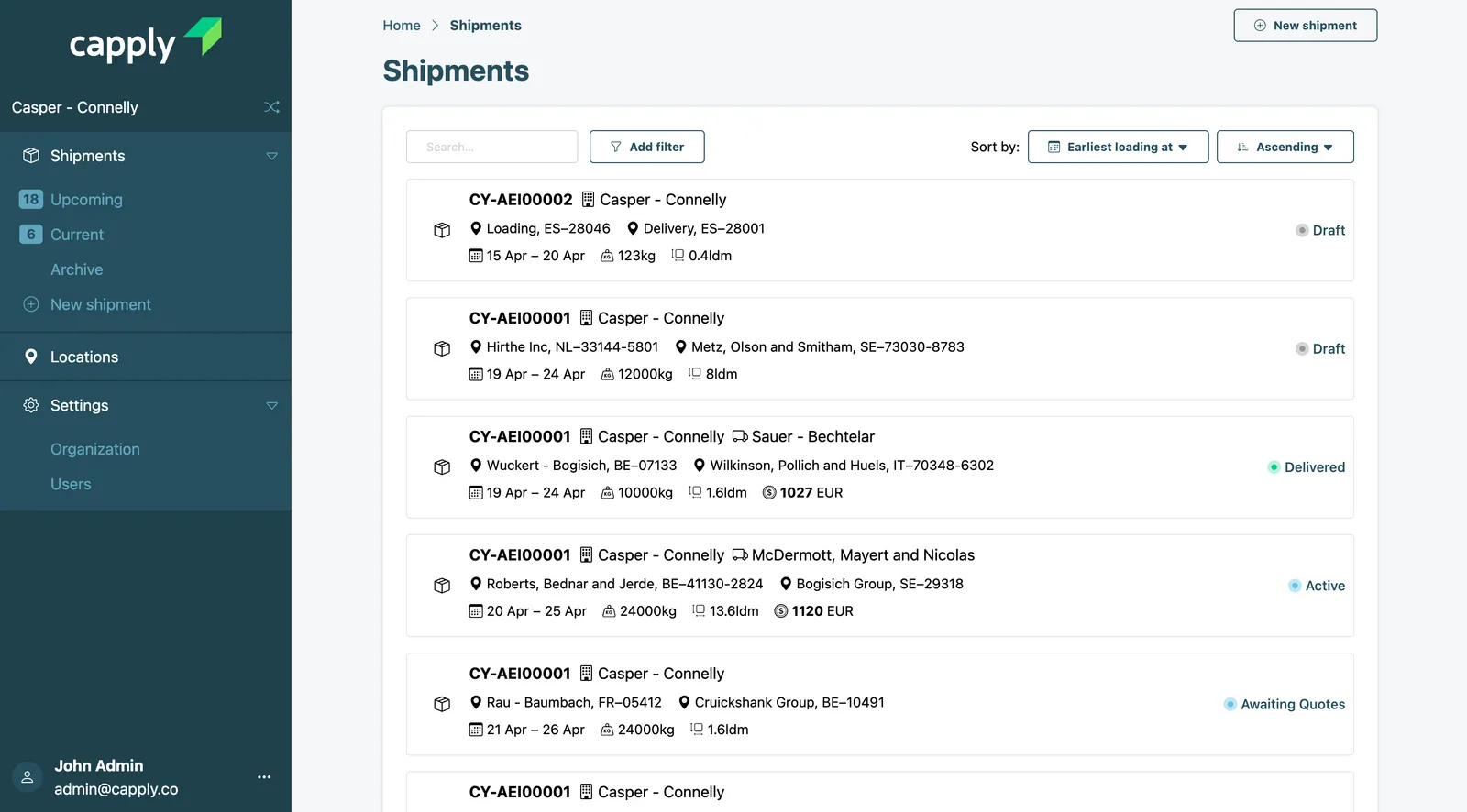
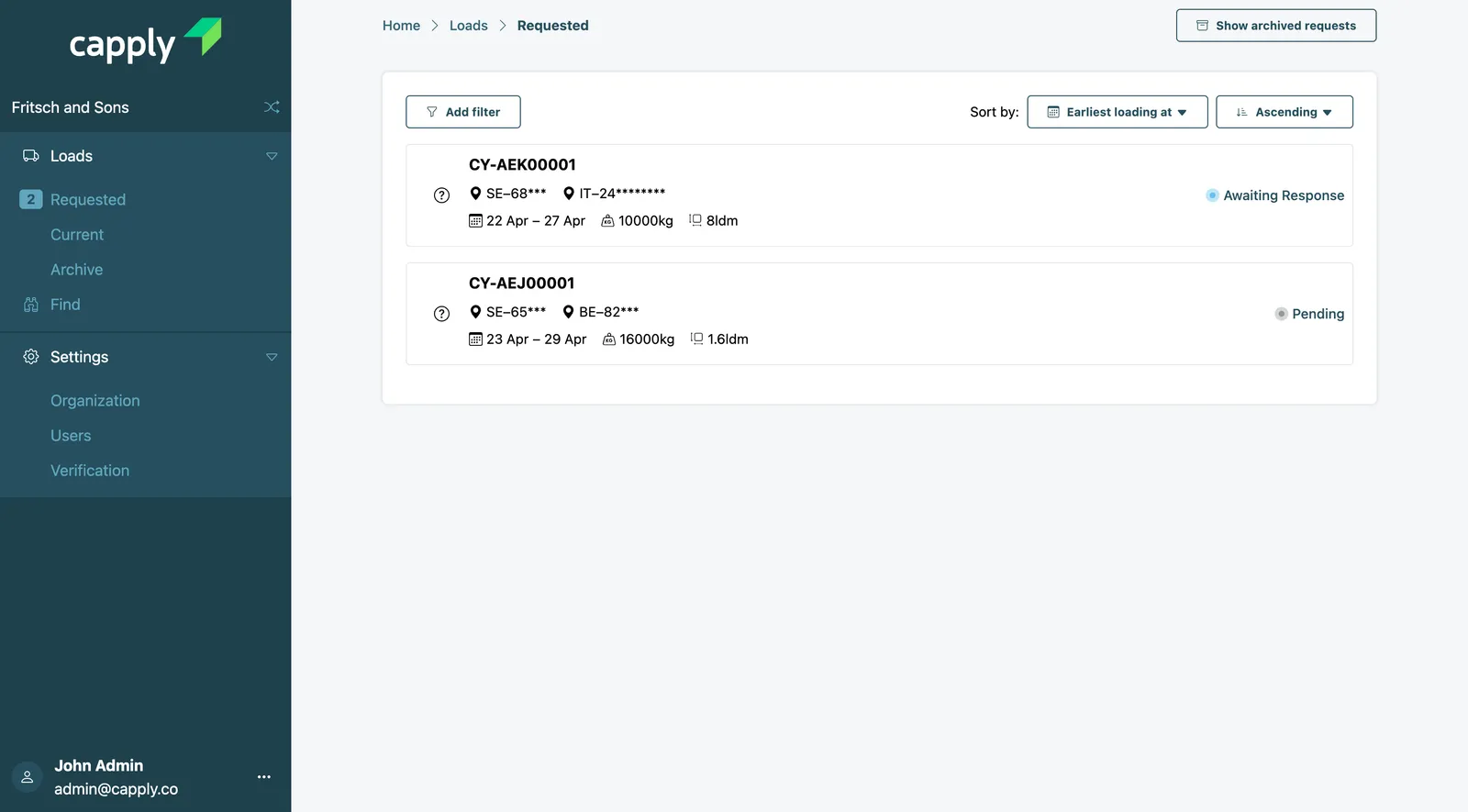
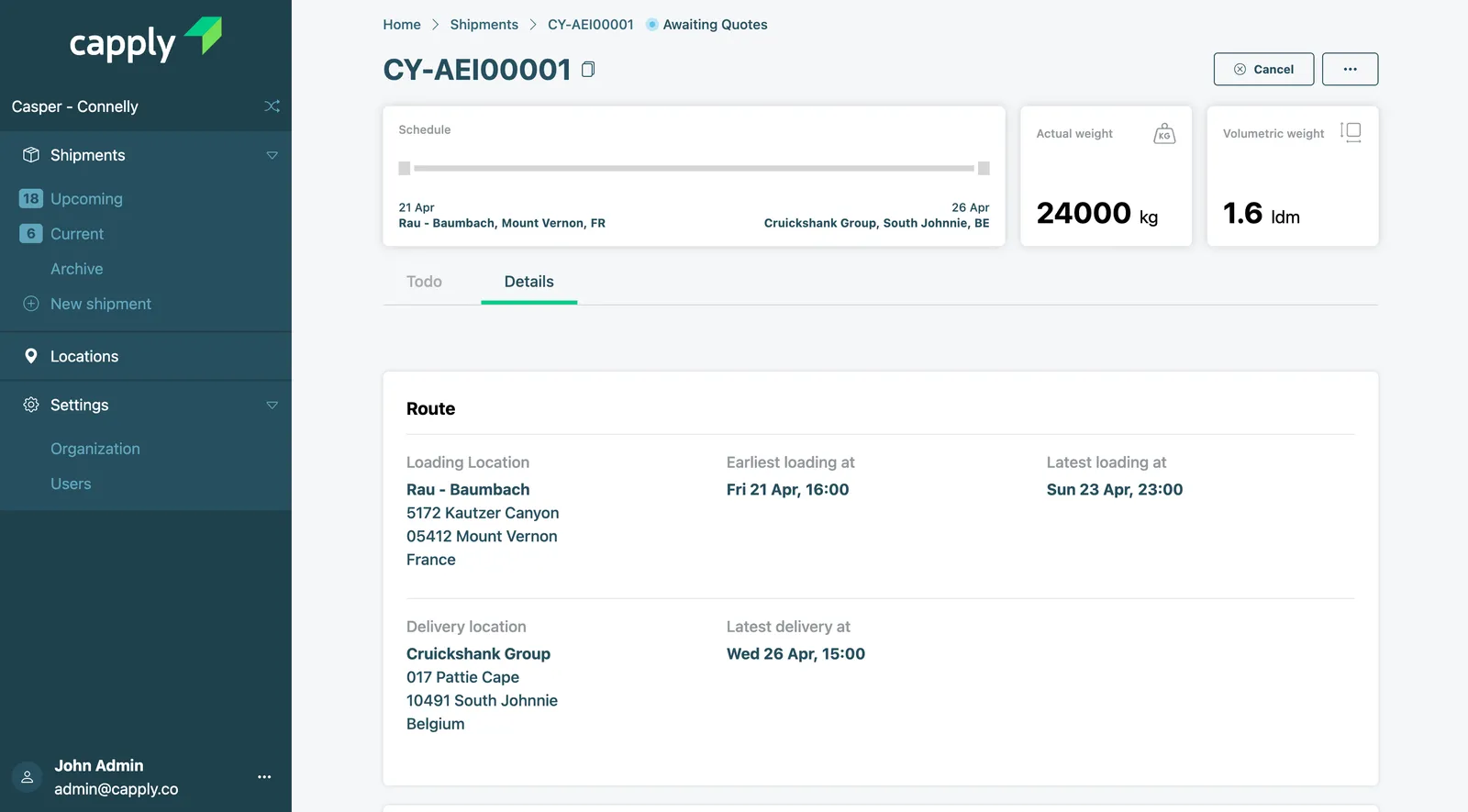
- Outcome: Delivered carrier filters, pricing visibility, quotes and routes for operations staff.
Key features
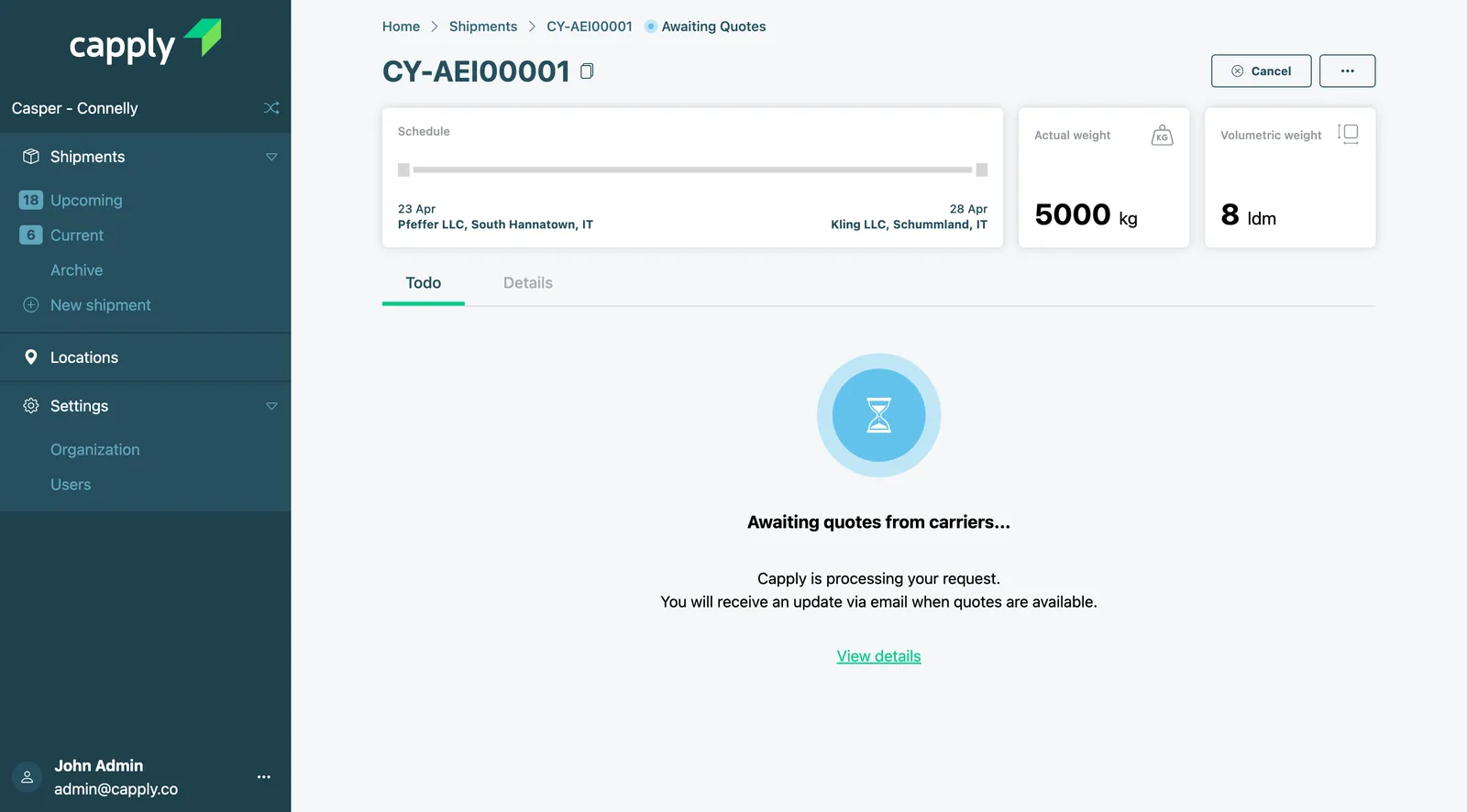
Quote-to-booking workflow
Shippers request quotes, carriers respond, and accepted quotes become bookings. The 27-model Prisma domain tracks each step in the shipment lifecycle.
Waybill generation
Waybill documents are rendered server-side to PDF using wkhtmltopdf, producing the paperwork carriers and shippers need for each booking.
CDC-driven HubSpot sync
Rather than calling HubSpot inline from request handlers, Capply captures Postgres changes via Debezium CDC and streams them through a Kafka pipeline to a separate consumer process, which pushes organization, user, membership, and shipment updates into HubSpot. Failed messages are retried and, after repeated failure, routed to a dead-letter topic rather than silently dropped. MailerSend delivers transactional email for quotes, bookings, and status changes, with Mailgun kept in the codebase as a fallback driver from an earlier provider migration.
Test pyramid enforced in CI
Capply’s CI pipeline runs Vitest unit tests, Playwright acceptance tests for the full quote-to-booking flow, and Storybook with Chromatic for visual regression. Each suite is a separate required job before code reaches staging or production.
Architecture
Scroll to see the full diagram →
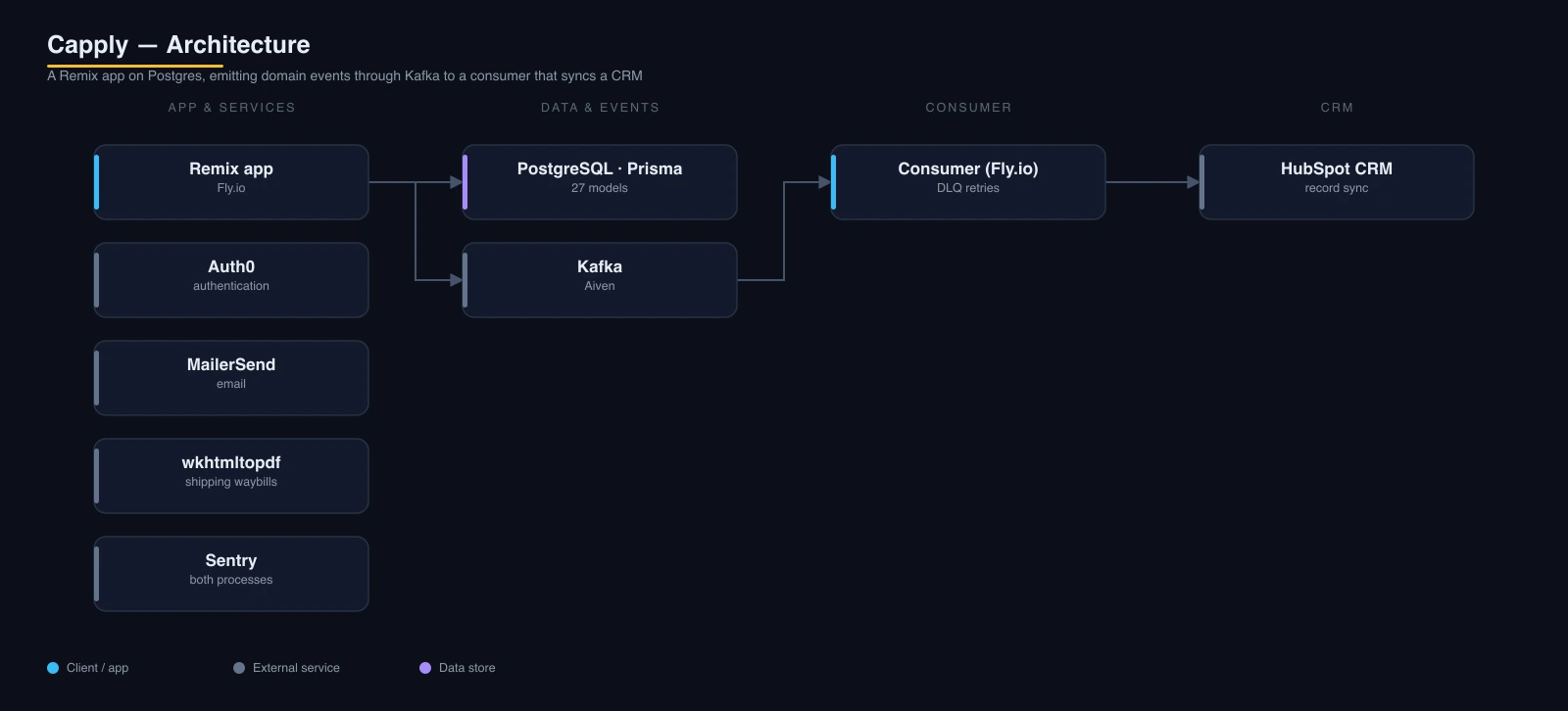
Frontend: Remix with React 18 provides server-rendered routes and nested data loading for a workflow-heavy B2B app.
Data layer: Prisma models the 27-entity logistics domain in a relational database. Debezium CDC captures row-level changes and streams them through Kafka, hosted on Aiven, to a dedicated HubSpot sync consumer. Failed messages are retried before being sent to a dead-letter queue.
Authentication and integrations: Auth0 handles authentication. HubSpot and MailerSend cover CRM and transactional email.
Infrastructure: The system runs on Fly.io as separate web and consumer processes. wkhtmltopdf generates waybill PDFs server-side, and Sentry captures errors in both processes.
Testing: Vitest runs the unit tests, Playwright handles acceptance testing, and Storybook with Chromatic covers visual regression. CI requires all three jobs.
Capply predates my React Native and Cloudflare work, so neither appears in this project. The 27-model relational domain, event-driven integration pipeline with retry and DLQ handling, and CI-enforced test pyramid show the server-side engineering behind freight operations that cannot fail silently.